- Superintelligence
- Posts
- Transform Your Workflow with OpenAI's Canvas!
Transform Your Workflow with OpenAI's Canvas!
Hey friends! Welcome to the development of the AI world. Today's top AI news highlights OpenAI’s expansion of access Canvas, Hugging Face upgrades TGI, and YouTube expands AI dubbing globally. Additionally, Meta introduces Coconut for advanced LLM reasoning. Let’s dive in—enjoy this AI ride in just 3 minutes!
The AI World Today
OpenAI Expands Canvas Access
Hugging Face TGI Upgraded
YouTube Expands AI Dubbing Globally
+
AI Training
Heads Up
AI Solution
OpenAI Makes Canvas Accessible to All Users
Screenshot: OpenAI
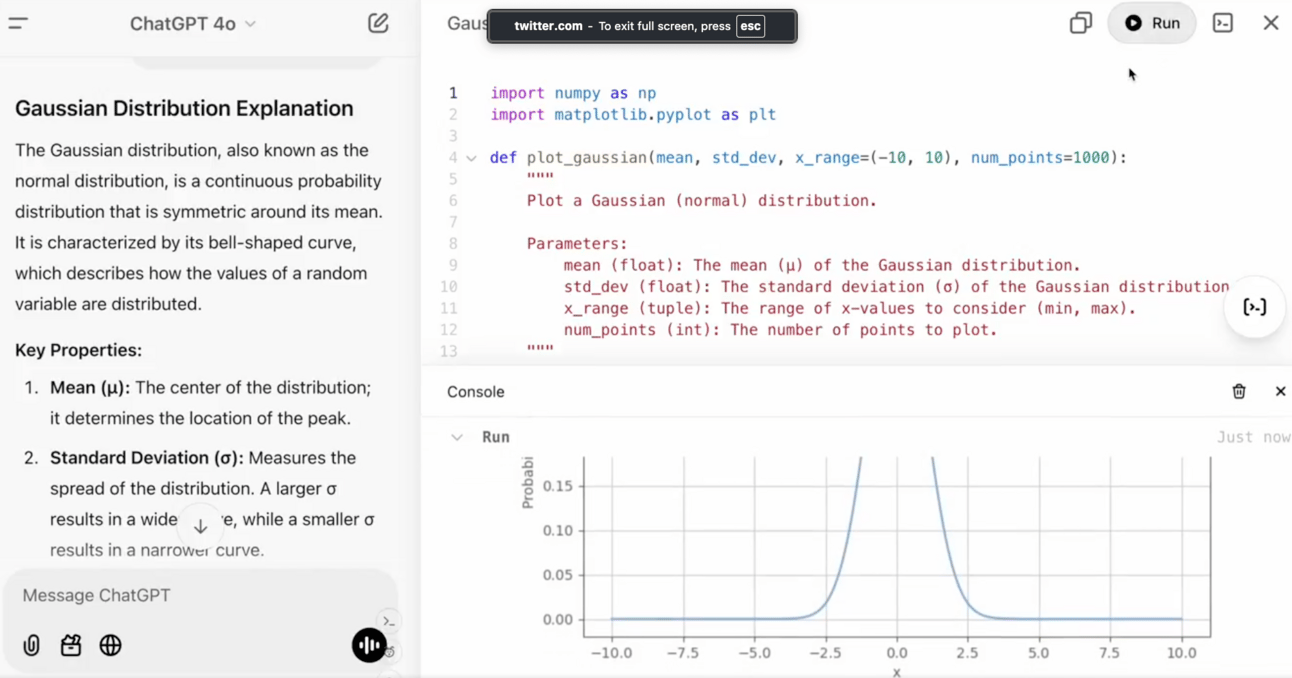
OpenAI has expanded its Canvas feature to all ChatGPT users, adding new capabilities as part of its “12 Days of OpenAI” announcements. Previously limited to paid subscribers, Canvas is now accessible via desktop web and the Windows app. This digital editing space integrates into GPT-4o, automatically opening for some prompts or pasted text. Canvas enables live editing of text or code in a right-hand sidebar, running Python code, debugging, and previewing graphics directly within the interface. It also supports more extensive text pasting and integrates with custom GPTs, where users can define when Canvas activates. OpenAI aims to enhance Canvas further, positioning it as a competitor in user-friendly interfaces like Anthropic’s Claude Artifacts.
Hugging Face Releases Faster TGI 3.0
Screenshot: Hugging Face
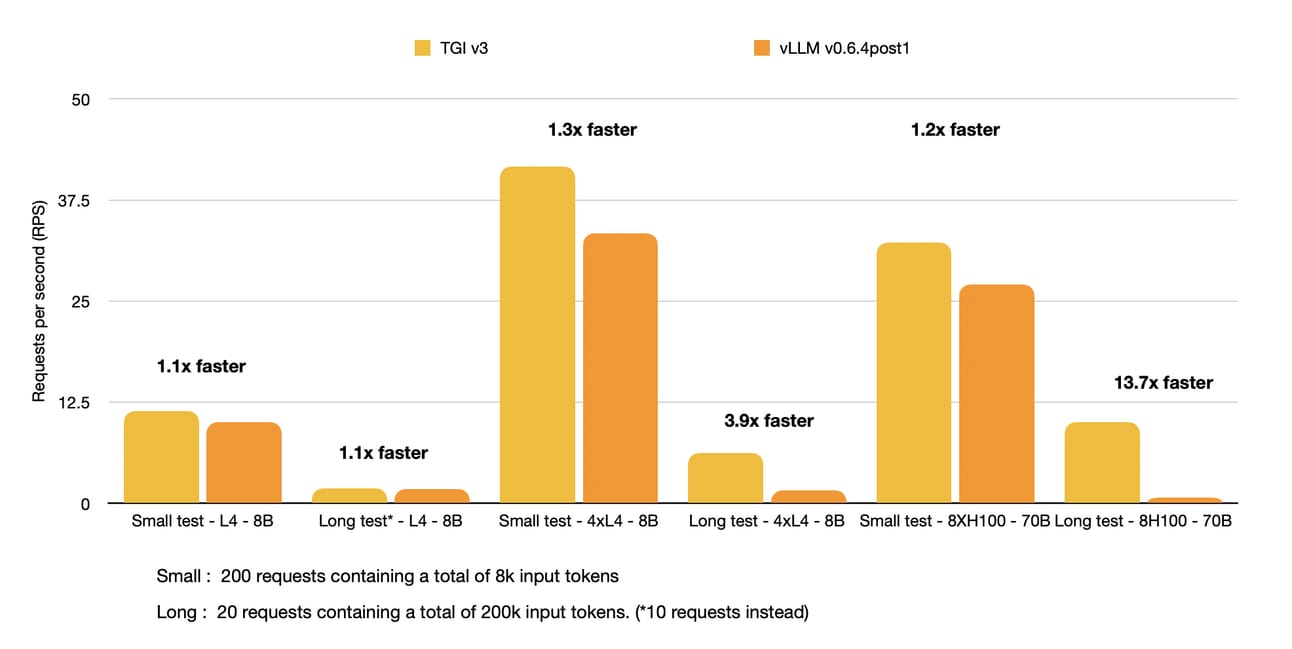
Hugging Face has released TGI 3.0, a major upgrade to its Text Generation Inference (TGI) framework, delivering significant performance improvements for large language models (LLMs). The update enables processing of 3 times more input tokens compared to vLLM, handling up to 30,000 tokens on an L4 GPU with the llama 3.1-8B model, while achieving 13 times faster processing for long prompts of 200,000+ tokens. These advancements are made possible through features like conversation caching, new flash-infer and flash-decoding kernels, optimized prefix caching, and improved VRAM efficiency. TGI 3.0 requires zero configuration and reduces memory usage. It will soon be available on AWS, Google Cloud, and Dell Enterprise Hub. Future plans include support for specialized and multimodal models.
YouTube Rolls Out Auto-Dubbing for Creators
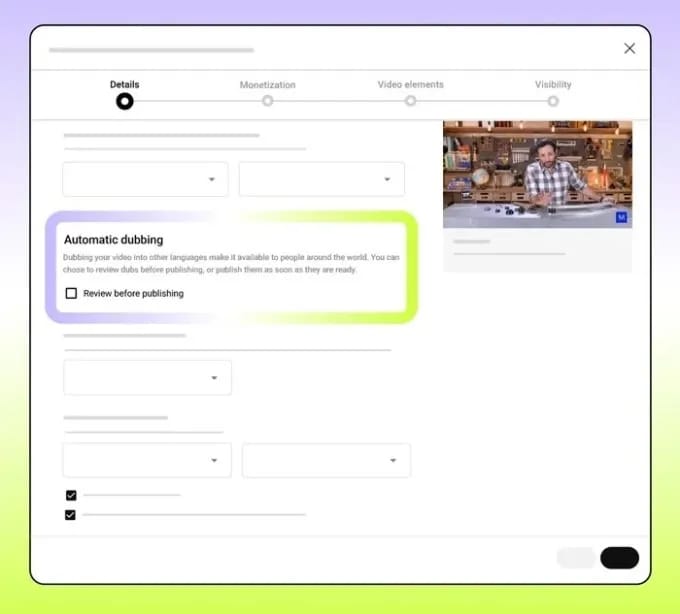
Image: YouTube
YouTube announced its AI-powered auto-dubbing feature is expanding to hundreds of thousands more channels, focusing on informational content like cooking and sewing videos. First introduced at VidCon 2023, this tool generates translated audio tracks, making content accessible globally. Creators upload videos as usual, and YouTube automatically detects the language to provide dubs in English, French, German, Hindi, Indonesian, Italian, Japanese, Portuguese, and Spanish. Powered by Google’s Gemini AI, the tool replicates human speech but may still face accuracy challenges. YouTube is improving the feature and plans to expand its availability soon. An upcoming “Expressive Speech” update promises to replicate creators’ tone and emotions, further enhancing global engagement. This initiative boosts inclusivity and global content accessibility.
AI Training
Devin AI Launches to Streamline Coding Workflows
Screenshot: Devin
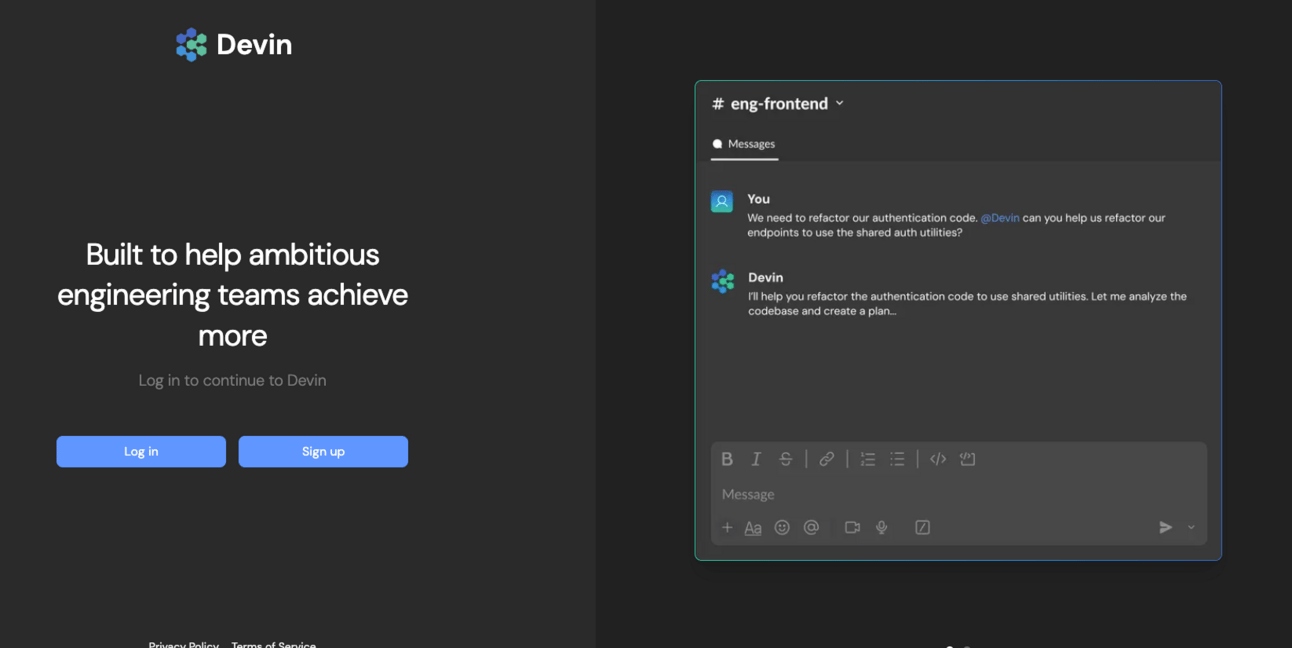
Cognition has launched Devin, an AI assistant designed to streamline coding workflows, now available for $500/month. Devin integrates seamlessly with tools like Slack, VSCode, and APIs, helping engineering teams manage tasks efficiently. While no longer positioned as a programmer replacement, Devin excels at handling small tasks such as fixing bugs, optimizing code, and drafting PRs. To use Devin, tag @Devin in Slack for quick task delegation, such as addressing frontend bugs or refactoring code. Developers can manage and review Devin’s contributions directly within IDEs like VSCode using its extension. Devin also integrates with custom workflows via its API. Start working with Devin at app.devin.ai, where onboarding and support from Cognition’s engineering team are included.
Heads Up
Yelp's year-end update introduces AI-powered review insights, a personalized home feed with diverse content, and a redesigned inbox, enhancing user experience and supporting business owners effectively.
Google partners with Intersect Power and TPG Rise Climate in a $20 billion renewable energy deal to power gigawatt-scale data centers with carbon-free energy.
Speak, an AI-powered language learning platform, raises $78 million in Series C funding, reaching a $1 billion valuation to enhance conversational language learning experiences.
Replit launches its upgraded AI development suite, introducing a new Assistant tool for quick project fixes and improvements, while ending early access for its Agent feature.
Lindy introduces phone call capabilities to its no-code AI agent platform, enabling users to create agents that handle calls and provide concise summaries.
AI Solution
Meta Introduces Coconut for Advanced LLM Reasoning
Meta has introduced Coconut (Chain of Continuous Thought), a groundbreaking framework enabling large language models (LLMs) to reason in a continuous latent space instead of natural language. Coconut leverages the LLM’s last hidden state as the reasoning state, directly feeding it back as the next input embedding in the continuous space. This innovative approach creates a "continuous thought" process, enhancing the LLM's reasoning abilities. The method shows significant improvements in handling complex reasoning tasks, including the emergence of breadth-first search capabilities within the model. Coconut represents a shift in how LLMs process and reason, moving beyond natural language constraints to achieve more sophisticated problem-solving. This paradigm promises advancements in reasoning-centric AI applications.