- Superintelligence
- Posts
- Superintelligence Approaches!
Superintelligence Approaches!
Hey friends! Welcome to the development of the AI world. Today's top AI news highlights Altman and Amodei’s AGI vision, Baidu’s smart glasses, and MIT’s robot training. Additionally, master Google Photo’s New AI video editing tool. Let’s dive in—enjoy this AI ride in just 3 minutes!
The AI World Today
Altman and Amodei’s AGI Vision
Baidu Unveils Competitive Smart Glasses
MIT’s LucidSim Revolutionizes Robot Training
+
Heads Up
AI Solution
Amodei and Altman Predict AI's Transformative Future
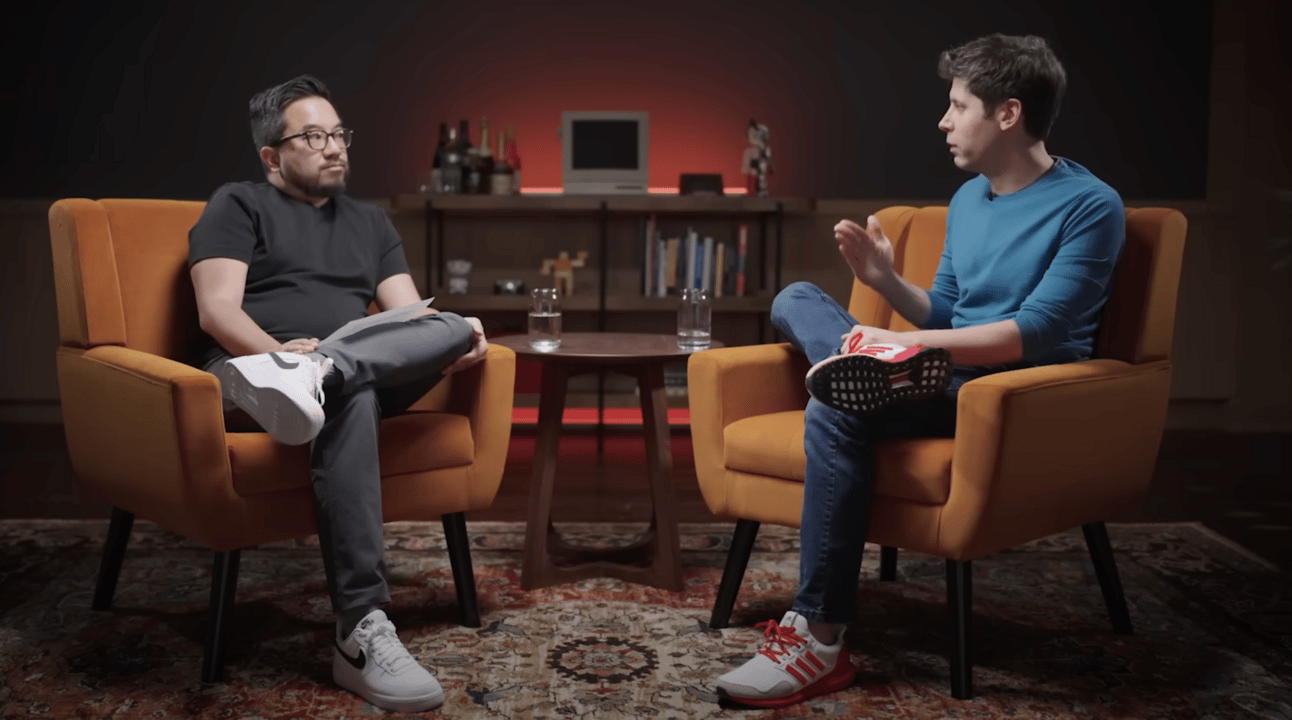
Screenshot: Y Combinator/YouTube
Anthropic’s Dario Amodei and OpenAI’s Sam Altman anticipate that “powerful AI” or even superintelligence could emerge within the next one to two years, potentially reshaping society. Amodei suggests AGI could arrive by 2026, envisioning AI smarter than Nobel laureates across fields. Altman, forecasting superintelligence by 2025, foresees unprecedented societal changes. This optimism contrasts with critics like Gary Marcus and Linus Torvalds, who argue current AI lacks the reasoning for AGI and caution against overhyping its potential. Despite present limitations, like GPT-4’s struggle with factual accuracy on benchmarks, experts agree AGI will significantly impact work, ethics, and human experience, requiring careful readiness and regulation to manage its risks.
Baidu Enters Wearable Tech Market, Challenges Meta

Illustration: Superintelligence AI/ChatGPT
Baidu is set to unveil its AI-powered smart glasses at the Baidu World event in Shanghai on November 12, 2024, challenging Meta’s Ray-Ban glasses. Developed by Baidu’s hardware division, Xiaodu, the glasses feature high-quality cameras, voice interaction through Baidu’s ERNIE model, and integration with Baidu Maps and its online encyclopedia. Expected to launch below Meta’s $299 price, Baidu aims for a competitive advantage in the growing AI-wearable market. Sales are planned for early 2025, allowing Baidu to capture market interest ahead of Apple’s anticipated entry in 2027. While Meta’s brand power poses a challenge, Baidu’s ecosystem-focused features and cost-effective approach could appeal to tech-savvy users.
MIT's LucidSim Trains Robots Without Real Environments

Screenshot: Lucidsim/Github
MIT researchers have introduced LucidSim, an innovative AI system that trains four-legged robots using AI-generated imagery, enabling them to perform complex tasks with up to 88% accuracy without real-world training. LucidSim combines physics simulations with diverse, AI-created scenes, allowing robots to navigate obstacles and chase moving objects effectively. Using ChatGPT, LucidSim generates thousands of unique training scenarios, varying in weather and lighting conditions, providing rich, simulated environments. Traditional methods relying solely on human demonstration achieved only 15% success in similar tasks, highlighting LucidSim’s breakthrough. This approach facilitates zero-shot transfer, where robots trained in simulated settings perform accurately in real-world scenarios, equipped with a basic RGB camera, a significant advance in affordable robotic training.
Heads Up
The Beatles' final song, “Now and Then,” restored with AI, earns Grammy nods for Record of the Year and Best Rock Performance nearly 50 years post-split.
The U.S. ordered TSMC to stop advanced chip shipments, including 7nm designs, to Chinese customers for AI and GPU applications, effective Monday.
AI platform UnifyApps secures $20M from ICONIQ Growth as companies navigate adoption hurdles and concerns over AI hallucinations, says CEO Pavitar Singh.
xAI launches Grok chatbot's free tier, granting select regions limited access to Grok 2, Grok 2 mini, and image analysis capabilities.
AI Solution
Master Google Photos' New AI Video Editing Tools
To use the new AI-powered video editing tools in Google Photos, follow these steps: Open a video in Google Photos and tap “Edit.” The trim tool will automatically appear. Drag the left or right handles to set the start and end points of your video. The handles are larger for easier adjustment, and timestamps display as you move them. Tap “Save copy” to keep your edited version. Tap “Video,” then “Enhance” to activate auto-enhancements. This feature adjusts color and stabilizes your footage automatically. To compare the enhanced and original video, toggle “Enhance” on and off. Once satisfied, tap “Save copy” to save your enhanced clip. Select “Video,” then “Speed” to control playback speed. You can set the start and end of the effect using the bars on the timeline, choosing speeds from 1/4x to 4x. Preview your adjustments by tapping “Play.” When done, choose “Save copy” to create a separate file with the new speed. Google Photos is rolling out AI-powered presets for Android and iOS. Once available, you’ll see the “Presets” option in the edit menu. Tap “Presets” and choose options like “Slow-mo,” “Zoom,” or “Track.” Google Photos will apply the best-suited effects automatically based on the video content. Preview the edits, and if you’re satisfied, tap “Save copy” to save. These tools provide an easy way to enhance, adjust, and stylize videos directly within Google Photos without needing additional editing software.