- Superintelligence
- Posts
- Meet Isaac
Meet Isaac
Hey friends! Welcome back to the latest edition of Superintelligence AI! Hope you all had a fantastic weekend! We are back after a few weeks of break. But we are back permanently. So, Today’s AI world is packed with exciting news from development of home robot to the first ai treaty singed by global powers. Stay tuned for all these updates and more global AI happenings. Let’s dive in and enjoy the AI ride!
The AI World Today
Robotaxi ‘s Wireless Charging
Isaac, The Home Robot
AI Powers Google Photos Search
Qualcomm Partners for MR Glasses
Ausi Firm’s AI Radiology Model
Nations Sign First AI Treaty
+
Heads Up
Save the Date
AI Solutions
Tesla Robotaxi to Feature Advanced Wireless Charging

Source: Seti Park
Tesla has filed a new patent for a wireless charging pad ahead of its Robotaxi unveiling event on October 10 at Warner Bros. studio in Burbank, California. The patent, titled "Parameter Estimation for Wireless Charging," introduces key innovations like adaptive control for variations in coil inductance, real-time adjustments, and improved charging efficiency. Core components include ground and vehicle pads with primary and secondary coils. The system enhances safety and performance by dynamically adjusting to environmental changes, making it vital for electric vehicles. From an AI perspective, the system’s ability to optimize charging parameters in real-time demonstrates advanced machine learning techniques, improving efficiency and safety for autonomous EV fleets like the Robotaxi.
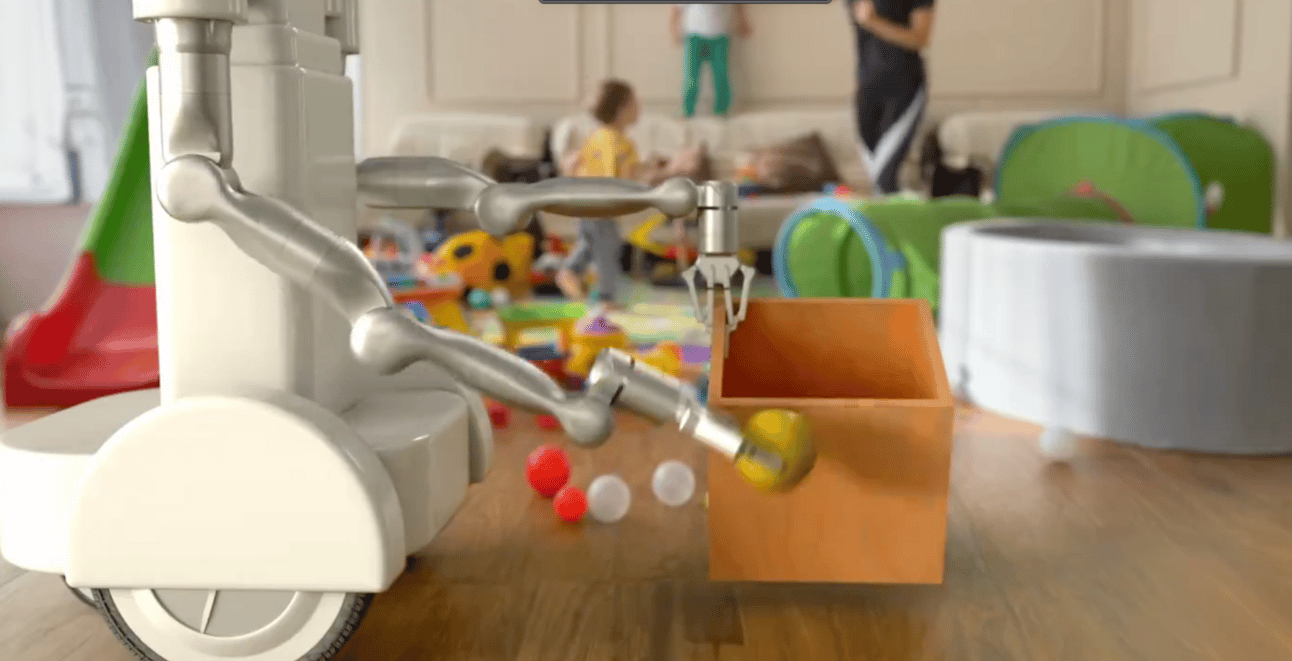
Isaac Home Robot Revolutionizes Household Chores Automation
Screenshot: Weave Robotics
Isaac, the world’s first personal home robot, is set to launch in fall 2025, with initial deliveries to 30 U.S. customers. Isaac can autonomously tidy living spaces, fold laundry, organize items, water plants, feed pets, and even find lost objects. It responds to voice, text commands, and app automation, and can be remotely operated by specialists for tasks beyond its capabilities. The robot can be reserved for $1,000, refundable, with the option to pay $59,000 upfront or in 48 monthly installments of $1,385. Isaac will continue to improve over time with over-the-air updates, making it smarter and more useful as it adapts to each home.
Google Introduces Conversational Search for Photos

Source: Google Photos
Google has launched "Ask Photos," an experimental, intuitive way to search photos using conversational queries, powered by its Gemini AI models. Rolling out slowly in the U.S., the feature lets users find specific images or information by asking questions like "Show me the best photo from each national park I've visited." With multimodal AI capabilities, Ask Photos understands context and details within photos, such as birthdays or locations, making it easier to retrieve memories or details. The feature also aids in tasks like curating trip highlights or generating captions. Privacy is prioritized, with personal data in Google Photos protected and not used for ads or external AI training. Ask Photos is expected to expand with more features soon.
Qualcomm, Google, Samsung Developing MR Glasses

Source: Yahoo Finance
Qualcomm CEO Cristiano Amon revealed plans to partner with Google and Samsung to develop mixed-reality (MR) smart glasses, according to CNBC. These glasses will combine Qualcomm’s chips, Samsung’s hardware, and Google’s software, offering a more streamlined alternative to bulkier devices like Apple’s Vision Pro headset. Similar to Meta’s Ray-Ban smart glasses, which also use Qualcomm chips, these new glasses aim to pair seamlessly with users' smartphones. Amon emphasized the role of generative AI in enhancing the glasses' functionality, making them more practical and appealing to consumers. He envisions the glasses becoming as common as regular eyewear, helping to drive widespread adoption and new user experiences in the evolving MR space.
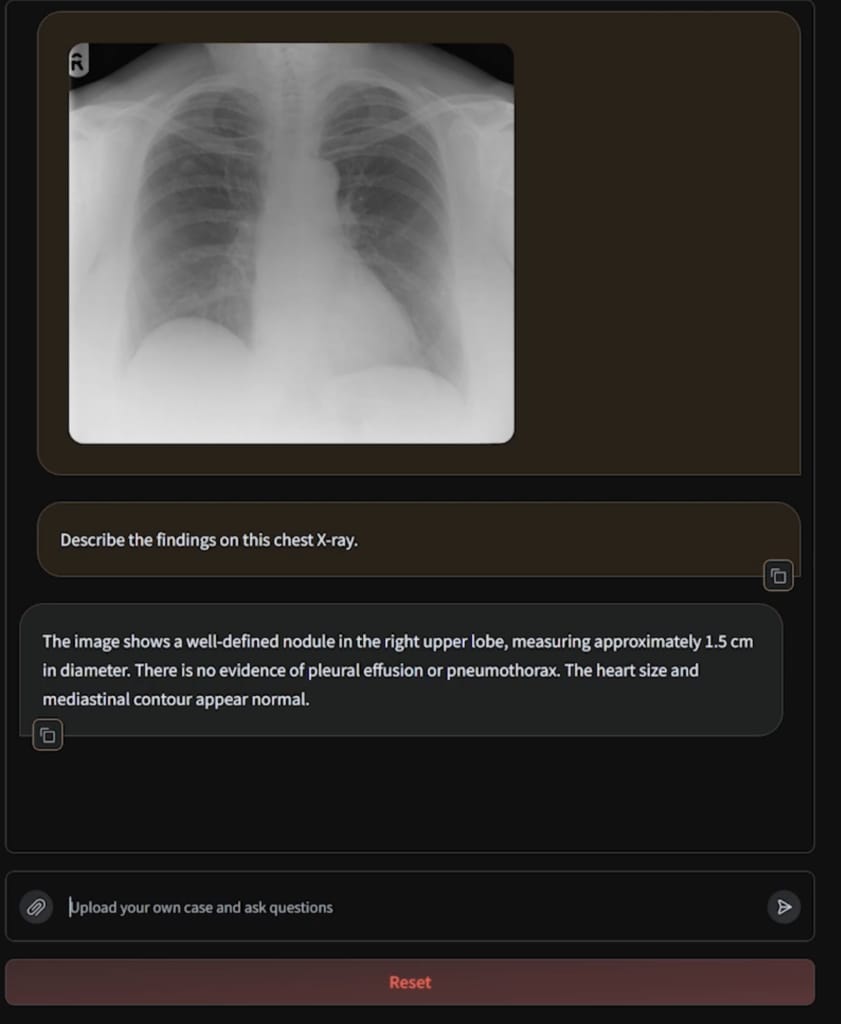
New AI Model Enhances Radiology Diagnostics
Source: Harrison AI
Harrison.ai has launched Harrison.rad.1, a breakthrough radiology-specific vision language model designed to revolutionize healthcare AI. Trained on real-world, diverse clinical data, Harrison.rad.1 excels in detecting and localizing radiological findings, generating reports, and offering longitudinal reasoning based on clinical history. It outperforms major language models, scoring 51.4 out of 60 in the Royal College of Radiologists’ FRCR 2B exam, surpassing models like GPT-4 and Google’s Gemini. The model also achieved 82% accuracy on the VQA-Rad benchmark and 73% on RadBench, highlighting its clinical relevance. Harrison.ai aims to engage healthcare professionals, regulators, and researchers to discuss safe and ethical AI use, continuing its commitment to improving patient outcomes and expanding healthcare capacity.
Heads Up
AI Tool: DeepSeek 2.5 and DeepSeek-Coder-V2 are available on Hugging Face
AI for B2B: Alibaba accelerates U.S. push with AI sourcing tool
AI App: China's Ant Group launches AI 'life assistant'
AI Market: China's tech firm Huawei introduces AI initiatives in Saudi Arabia
AI Fund: Egypt Partners with Tsinghua Unigroup to Launch $300 Million Tech Investment Fund Focused on AI and Semiconductors
AI Video: YouTube announces new tools to detect AI-generated videos
Save the Date
September 10-11: The U.S. Department of State and Nigeria’s Ministry of Communications, Innovation, and Digital Economy will convene approximately 300 stakeholders in Lagos for the “Global Inclusivity and Artificial Intelligence: Africa” conference.
AI Solutions
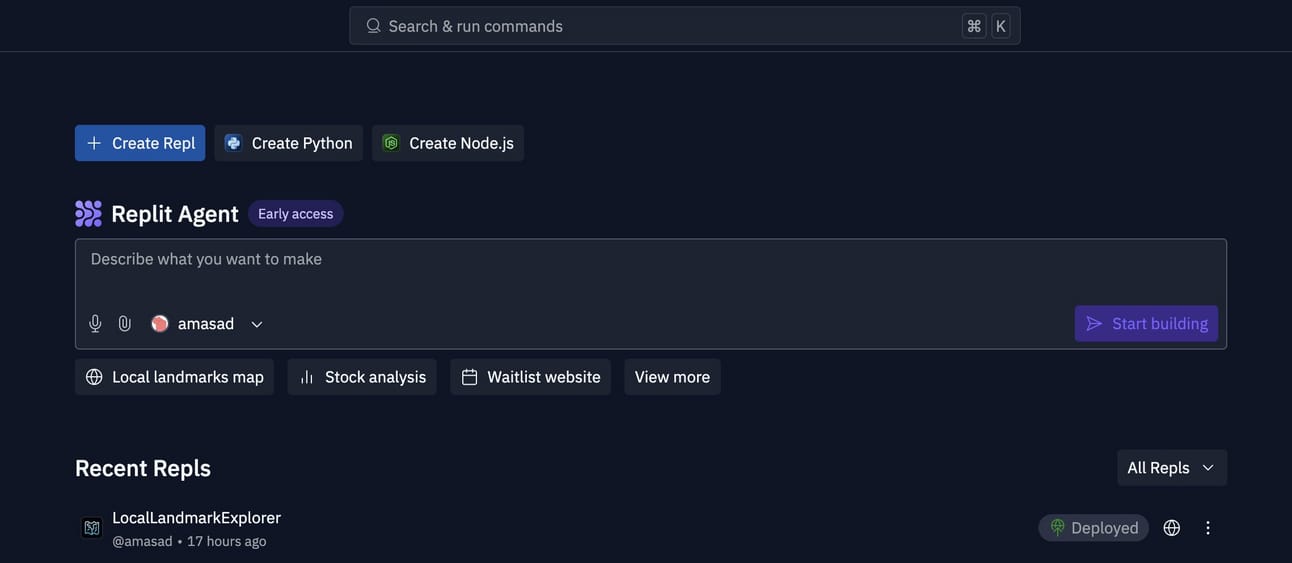
Replit AI Agent Builds Software From Scratch
Source: Amjad Masad/X
Replit has launched an advanced AI agent designed to autonomously build entire software applications from scratch. Unlike traditional coding assistants, this AI agent functions more like an intern developer, capable of understanding user goals, reasoning through tasks, and independently making decisions to complete projects. It can handle every step of the software development lifecycle, from writing and debugging code to setting up environments and managing deployments. Trained on millions of data points from Replit’s user base, the AI agent learns from real-world scenarios, allowing it to tackle complex tasks more effectively. It not only generates code but also explains its decisions and collaborates with users in real-time. The agent’s ability to execute bounties, or project requests, gives it a distinct advantage by using natural language prompts to create functional software. This new technology democratizes software development, making it accessible to non-developers and allowing professionals to focus on creativity and innovation while routine tasks are automated.