- Superintelligence
- Posts
- Karpahty's Triumphant Return
Karpahty's Triumphant Return
Hey friends! We're back with the latest buzz from the AI world. Today, we're diving into exciting innovations in AI for schooling and exploring new AI solutions in data models. If you know anyone who would love to stay updated on global AI developments, feel free to share this with them. Thanks for being with us, and enjoy the read!
The AI World Today
Karpathy’s AI Education Innovation
Mistral AI Dual Models Release
AI Training Data Controversy
Meet Haiper 1.5 AI Video Curation
Largest Sign Language Dataset Unveiled
State of AI Governance in Africa
+
AI Spotlight
Heads Up
Save the Date
AI Solutions
Ex Telsa AI Mastermind Launches Eureka Labs for Education

Image: Karpathy/X
Andrej Karpathy, a prominent figure in AI, announced on July 16 the launch of his new venture, Eureka Labs. Karpathy, who has previously served as the head of AI at Tesla and was a founding member of OpenAI, is renowned for his contributions to AI and education. Eureka Labs aims to revolutionize education by integrating AI into the learning process. The company’s vision is to create an AI-native school, where subject matter experts design course materials supported by AI Teaching Assistants. Their first product, LLM101n, is an undergraduate-level course that guides students in training their own AI models. This initiative promises to expand educational reach and depth, making learning more accessible and comprehensive.
Mistral AI Unveils Mathstral and Codestral Mamba

Image: Mistral AI
On July 16, French Startup, Mistral AI, unveiled to major innovative AI models the Codestral Mamba and Mathstral.Codestral Mamba, an innovative AI model developed with Albert Gu and Tri Dao, designed to offer linear time inference and handle sequences of infinite length. This makes it highly efficient for code productivity tasks, rivaling state-of-the-art transformer models. As per Mistral AI, tested up to 256k tokens, Codestral Mamba is ideal for local code assistance. It can be deployed via the mistral-inference SDK, TensorRT-LLM, and will soon be supported in llama.cpp. Available under the Apache 2.0 license, it supports advanced code and reasoning capabilities. The model's raw weights can be downloaded from HuggingFace.
Meanwhile, the AI startup launched Mathstral, an advanced AI model tailored for complex mathematical problems. Mathstral specializes in STEM subjects, and as stated by Mistral AI, outperforms in its size category with scores of 56.6% on MATH and 63.47% on MMLU. It excels further with majority voting, scoring 68.37% on MATH, and 74.59% using a strong reward model. Hosted on HuggingFace, Mathstral is designed for use and fine-tuning with mistral-inference and mistral-finetune. This release supports academic projects, reflecting the development philosophy of la Plateforme. It is created in collaboration with Project Numina, a non-profit organization with the mission is to foster the development of human and artificial intelligence in the field of mathematics.
AI Giants Illegally Used YouTube Video Data for AI Training

Screenshot: Proofnews/YouTube
An investigation by Proof News revealed that major AI companies, including Apple, Nvidia, and Anthropic, used subtitles from 173,536 YouTube videos without permission to train their AI models. This data was extracted from over 48,000 channels, involving educational content and popular creators like MrBeast and Marques Brownlee. The dataset, known as YouTube Subtitles, comprises video transcripts and translations but not video imagery. This unauthorized use has sparked concerns among creators, who argue they should be compensated. EleutherAI, the dataset's creator, aimed to democratize AI technology but did not respond to inquiries about these findings. This issue highlights the ethical and legal challenges of data use in AI training.
New AI Upscaler Enhances Video Quality Drastically

Screenshot: Aisitrep/X
Haiper 1.5, the latest AI video generator, has been unveiled, boasting the capability to produce high-quality videos of up to 8 seconds. Developed by former Google DeepMind researchers, Haiper 1.5 not only generates short, high-quality videos but also features an upscaler that enhances videos to HD resolution, significantly refining the output. This advancement in AI technology is poised to revolutionize video content creation, providing new possibilities for industries such as marketing, entertainment, and social media. The release of Haiper 1.5 represents a leap forward in AI-driven creativity, potentially setting a new standard in the field of digital content creation
Less Than 10 African Nations Adopt AI Strategy
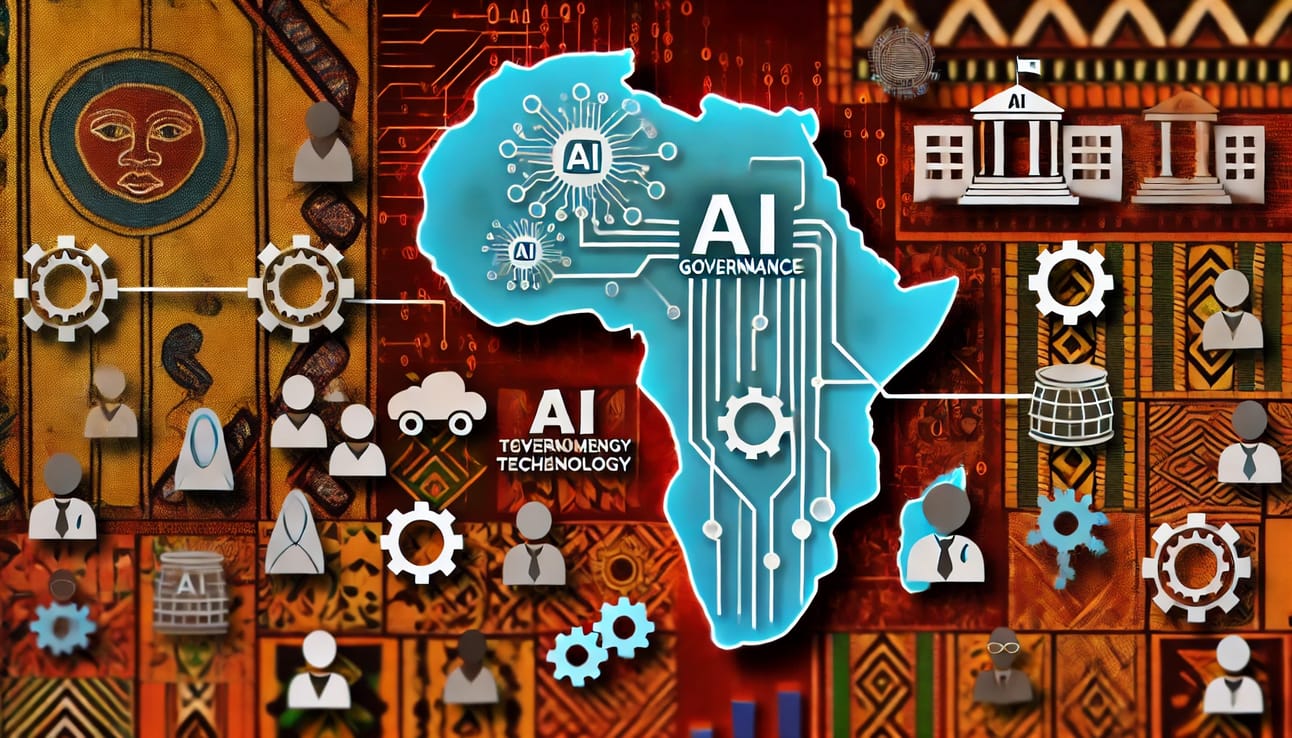
Image: Illustration/Superintelligence AI
The African Observatory on Responsible AI has released a report titled "Responsible AI Governance in Africa: Prospects for Outcomes-Based Regulation." The report highlights that fewer than 10 African countries have adopted a national AI strategy, focusing mainly on governance, infrastructure, skills, and research but lacking clarity on future AI governance and socio-economic outcomes. It stresses the importance of human capital development and regional collaboration to drive socio-economic transformation. Despite emerging AI policies in countries like Egypt, Mauritius, and Rwanda, foreign technology dominance persists, often misaligned with Africa's developmental goals. The report advocates for outcomes-based regulation tailored to local socio-economic realities, emphasizing risk-based performance standards to mitigate AI's adverse effects.
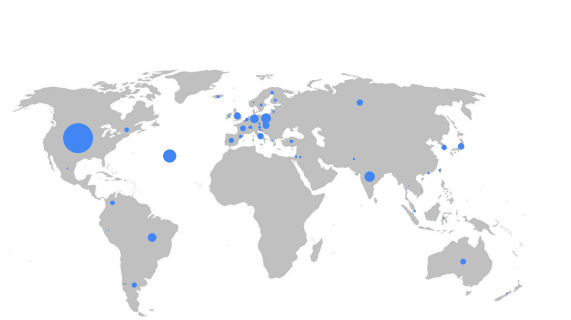
YouTube-SL-25 Enhances Sign Language Data Resources
Screenshot: Arxiv
Google has introduced YouTube-SL-25, a groundbreaking large-scale, open-domain multilingual sign language parallel corpus. This dataset, sourced from YouTube, contains over 3,000 hours of sign language videos with aligned captions, covering more than 25 different sign languages. YouTube-SL-25 is over three times larger than the previous YouTube-ASL dataset, making it the most extensive parallel sign language dataset available. This corpus provides critical resources for machine learning research, addressing the data scarcity that hinders advancements, especially for lesser-studied sign languages. Using a T5-based multilingual multitask model, Google established baselines for sign-to-text tasks and reported benchmark scores across four sign languages, demonstrating that multilingual transfer enhances performance for both high- and low-resource sign languages within the dataset.
AI Spotlight
Amazon Web Services App Studio: Transforming Application Development
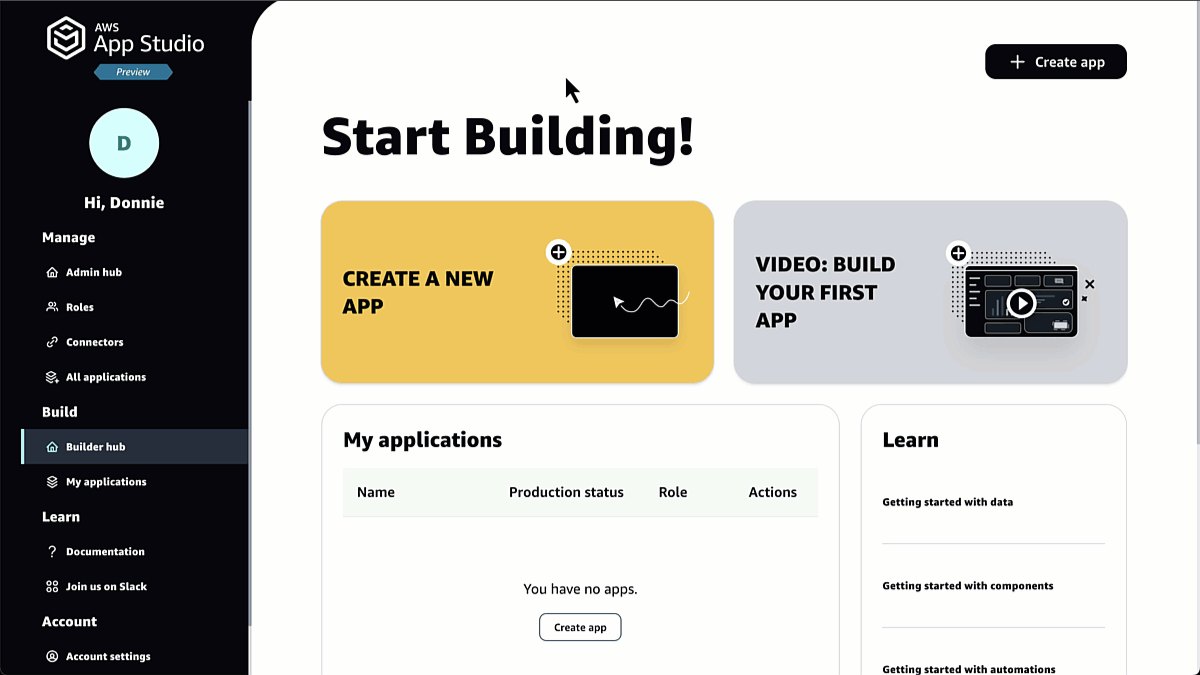
Image: AWS
On July 10, Amazon launched AWS App Studio, a generative AI-powered service designed to simplify enterprise-grade application development. Now available in preview, App Studio enables technical professionals without software development skills—like IT project managers and data engineers—to swiftly create business applications.
Key Features:
Generative AI-Powered Assistant: Start with a simple prompt, and App Studio generates an application outline, complete with UI, data model, and business logic.
Point-and-Click Interface: Easily refine applications with detailed guidance and built-in connectors for AWS services and third-party applications.
Cost-Effective: Free to build, users only pay for the time spent using published applications, saving up to 80% compared to other low-code platforms.
How It Works:
Describe Application: Write a basic prompt.
Generate Outline: App Studio creates an initial application framework.
Refine and Connect: Use the intuitive interface to make adjustments and connect to data sources.
Why it matters: App Studio democratizes app development, empowering more professionals to innovate and solve business problems without needing deep coding expertise. This boosts productivity and operational efficiency across various roles.
AWS App Studio is now available in preview in the US West (Oregon) Region.
Heads Up
AI Invest:EY Study Highlights Growing AI Adoption and Investment Boom Among US Businesses
AI Partnership : Huawei Enters New Partnership to Drive Increased AI Adoption in China’s Heavy Industries
AI Funding: Thai Billionaire Heir’s AI startup Amity Raises US$60 million
AI Funding:Exa raises $17M from Lightspeed, Nvidia, Y Combinator to Build a Google for AIs
AI Funding: Bioniq, the AI-Driven Supplements Company, Raises $15 M
AI Service: U.S. Start-Up Uses AI To Track Space Junk And Warn Of Collisions
AI Day: What Do We Know of July 16, the AI Appreciation Day?
AI Chief: PwC US Names First AI Chief in Wake of $1 Billion Investment
AI Invest: Bank of America Plans to Spend $4 Billion on AI
Save the Date
July 22-25: Orlando Hosts Teaching and Learning With AI: A Sharing Conference Between Educational Practitioners
AI Solutions
AI Tool Predicts Alzheimer's Disease Progression

Image: Cambridge University
Cambridge scientists have developed an advanced AI tool capable of predicting with 80% accuracy whether individuals with early signs of dementia will remain stable or progress to Alzheimer's disease. This innovative approach utilizes routinely-collected, non-invasive, and low-cost patient data such as cognitive tests and MRI scans. The AI model is more sensitive than current diagnostic methods and has the potential to significantly improve early detection and treatment outcomes for Alzheimer's disease.The model uses data from cognitive tests and structural MRI scans showing grey matter atrophy. The AI was trained using machine learning techniques on the collected data. It identifies patterns and markers that indicate whether a patient’s mild cognitive impairment will progress to Alzheimer’s disease. The model was tested on real-world data from 600 additional participants from the US cohort and 900 individuals from memory clinics in the UK and Singapore. It was able to correctly identify Alzheimer's progression in 82% of cases and stability in 81% of cases.