- Superintelligence
- Posts
- Cybernetic Superpowers, India's LLM, Africa Storage
Cybernetic Superpowers, India's LLM, Africa Storage
In today's edition of Superintelligence, we cover AI developments in in the world of AI with a focus on China, US, India, Europe and Africa.
The AI World Today
Neuralink's Cybernetic Superpowers
AI in Labs: OpenAI, Los Alamos
Altman, Andreessen Save DIU
Samsung Unveils AI Foldables
Shanghai AI Governance Declaration
Meet India's First Text-to-Video AI
Huawei's Africa AI Storage
First Hate Speech Detection LLM
+
Heads Up
Save the Date
Good Reads
Neuralink Grants Cybernetic Superpowers to People in Need

Screenshot: X
Elon Musk announced during a live stream on X that Neuralink, his brain-computer interface company, aims to enable people who have lost speech to communicate via the Optimus robot using Neuralink. Musk also revealed plans to develop Optimus limbs for amputees, allowing direct control via brain signals, effectively granting "cybernetic superpowers." A Neuralink representative, mentioned that mapping brain signals to Optimus could help disabled individuals perform daily tasks through teleoperation. Critics, however, argue that Optimus will likely perform these tasks autonomously rather than relying on teleoperation. This significant move showcases Neuralink's potential to revolutionize assistive technology and enhance human capabilities.
OpenAI Explores Generative AI's Lab Potential

Image: OpenAI
OpenAI and Los Alamos National Laboratory are collaborating to explore the benefits and risks of using generative AI in active laboratory settings. The initial experiment involves using AI to assist non-experts in molecular biology to perform basic biomedical tasks, such as helping genetically engineered E. coli bacteria produce insulin. OpenAI's technical lead, Tejal Patwardhan, emphasized the potential of advanced AI models to contribute to scientific progress by evaluating them in real lab environments. This collaboration aims to understand how AI can be both a valuable tool and a potential threat in scientific research. Previous research by OpenAI found GPT-4 had a mild uplift in delivering information that could lead to biological threats, focusing on written tasks rather than lab work.
Tech Titans Safeguard Pentagon Innovation Unit
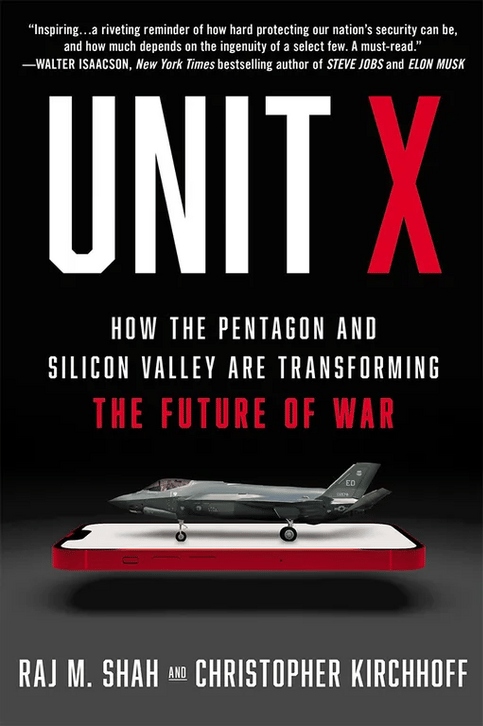
Image: Unit X Cover
OpenAI CEO Sam Altman and investor Marc Andreessen played a crucial role in persuading the Trump administration to retain the Defense Innovation Unit (DIU), a Pentagon unit fostering tech collaboration with Silicon Valley. According to Axios, Their efforts, detailed in the new book "Unit X," emphasized the DIU's importance in helping startups navigate military bureaucracy. Since then, the DIU has become essential in rapidly adopting AI and other technologies for the military. Established by President Obama, the DIU has facilitated $70 billion in tech acquisitions and helped create AI unicorns like Anduril and Shield AI. However, using AI for military purposes has sparked controversy, particularly within companies like Google, leading to protests and withdrawals from defense projects.
New Samsung Phones and Wearables Boost AI

Screenshot: Samsung/X
Samsung Electronics unveiled its latest foldable smartphones, the Galaxy Z Fold 6 and Z Flip 6, on Wednesday, emphasizing AI capabilities and health monitoring features. The Galaxy Z Fold 6 is Samsung's lightest and slimmest foldable, priced at $1,899.99, while the Z Flip 6 boasts a longer battery life and is priced at $1,099.99. Samsung introduced AI functions such as "listening mode" for simultaneous voice interpretation and AI-enhanced search functions developed with Google. The new Galaxy Watch features sensors for sleep apnea monitoring and advanced glycation end-products (AGEs) measurement. Additionally, Samsung launched the Galaxy Ring, a lightweight health monitoring device priced at $399. The new products will be available from July 24 in South Korea, North America, and Europe.
China Expands AI Cooperation with Shanghai Declaration

AI Generated Illustration
China has issued the Shanghai Declaration on Global AI Governance. The five-point pledge aims to foster open AI development and international cooperation. It emphasizes AI safety, particularly preventing AI from manipulating public opinion and spreading disinformation. The declaration also promotes AI research in industries like healthcare, transportation, and agriculture, and supports the transfer of AI technologies in a spirit of openness. Chen Jining, party secretary for Shanghai, and Chinese Premier Li Qiang underscored China's commitment to AI governance, building on past initiatives such as backing the U.S.-led UN resolution on trustworthy AI and the Bletchley Declaration on AI Safety.
Indian Startup Introduces First AI Video Gen Platform

Illustration
Phenomenal AI has launched India's first full text-to-video AI platform in New Delhi, marking a significant milestone in the country's AI landscape. The platform leverages advanced AI and machine learning to transform text, including scripts, into professional-grade videos. Founder and CEO Sanjay Rodrigues highlighted this achievement on LinkedIn, noting that India joins the ranks of global GenAI video platforms like SORA AI, Luma AI, and Runway. Designed to be cost-effective and user-friendly, the platform caters to professionals in social media, e-commerce, marketing, and education. The startup showcased its capabilities with AI-generated videos of scenic landscapes. Currently in beta, Phenomenal AI aims to revolutionize video production in India while advocating for responsible AI use.
Huawei Enhances AI Storage for African Transformation
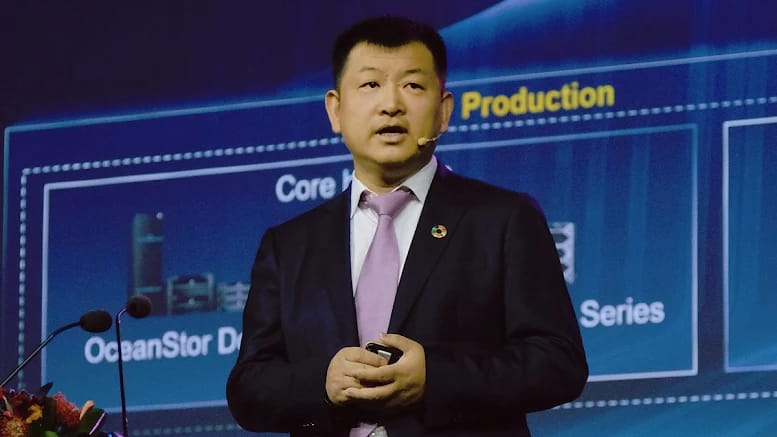
Screenshot: Huwaei
Huawei Technologies has prioritized data storage solutions for Africa’s digital transformation, as highlighted at the Huawei Africa Connect 2024 conference in Johannesburg. Dr. Peter Zhou, president of Huawei’s data storage product line, emphasized the evolving nature of data storage driven by applications, transitioning from direct-attached storage to AI storage. The OceanStor A800, tailored for AI applications, can increase AI cluster utilization by 30%, offering high bandwidth and IOPS performance, scalability, and energy efficiency. With 10 times higher capacity SSDs, Huawei aims to enhance data management and protection. This initiative underscores the importance of robust data infrastructure in leveraging generative AI for creating valuable data assets.
Textgain Develops World’s First Hate Speech-Focused LLM

AI Generated Illustration
Belgian AI company Textgain is developing CaLICO, the world’s first comprehensive Large Language Model (LLM) for detecting hate speech in all official European languages. Over the next 12 months, Textgain aims to set new standards for multilingual AI-based hate speech detection. The company, an AI spin-off from the University of Antwerp, recently won €250,000 as one of the four winners of the European Commission’s Large AI Grand Challenge. The award also includes 8 million GPU hours on EuroHPC JU supercomputers LUMI and LEONARDO, accelerating the development of CaLICO. Textgain is committed to ethical AI, ensuring transparency and precision in content moderation.
Heads Up
AI Invest: Singapore Temasek to Invest on Early Adopters of AI in the U.SL
AI Hype : Amazon's Cloud Launches Blitz of New AI Products
AI Acquisition: AMD to Acquire Finnish Startup Silo AI for $665 mln in AI race
AI Regulation: New Zealand Crafts AI Regulation and Digital ID Strategy
AI Funding: Index Ventures Raises $2.3 Billion to Fuel AI Innovations
AI Partnership: Google and KAUST Unite to Advance AI Research in Saudi Arabia
AI Innovation: Iran Opens National Artificial Intelligence Organisation
AI Challenge: SAWiT.AI Announces Series of World’s Largest AI Challenge to Unlock India’s $550 Billion Economic Potential
AI Competition: UAE Leaders Differences on AI Cooperation with China
AI Development: Avicenna.AI Secures European MDR Certification for AI Medical Imaging Portfolio
Save the Date
July 11-12: Elets India AI Summit Kicks Off in India
Good reads
July 10: On Open-Weights Foundation Models