- Superintelligence
- Posts
- Corrupt Politicians GPT
Corrupt Politicians GPT
In today's edition of Superintelligence, we cover AI developments in the US, Europe, Asia, Australia and Africa.
The AI World Today
OpenAI Breach Details Revealed
TeleVision Revolutionizes Robot Control
MIT Innovates AI Video Generation
Radboud's AI Recreates Brain Images
Chinese GPU Boost Unveiled
Nvidia's $12B China Sales
India to Establish New AI School
Australia Shifts Intelligence Cloud
AI GPTs Aid Protests In Kenya
+
Heads Up
Save the Date
Good Reads
Hacker Accesses OpenAI’s Internal AI Discussions

Screenshot: Reuters
A hacker has accessed OpenAI's internal messaging systems last year, stealing design details of their AI technologies. The New York Times reported that the hacker infiltrated an online forum where OpenAI employees discussed their latest technologies. Although sensitive design information was taken, the hacker did not access the systems where OpenAI, the company behind ChatGPT, houses and builds its AI. OpenAI informed employees and the board about the breach in an all-hands meeting in April last year but chose not to disclose it publicly, as no customer or partner data was compromised and it wasn't deemed a national security threat. The hacker was believed to be a private individual with no ties to foreign governments, and federal law enforcement was not notified.
US Researchers Unveil Advanced Robot Teleoperation System

Screenshot: Xuxin Cheng/X
Researchers at UC San Diego and MIT have introduced Open-TeleVision, an open-source teleoperation interface for immersive remote robot control. This system allows operators to control robots from up to 3000 miles away, akin to the experience in the movie "Avatar." Open-TeleVision features real-time stereo video streaming, providing spatial and depth understanding for precise object manipulation, including challenging tasks with transparent objects. The system's active neck, inverse kinematics (IK), and retargeting enable intuitive perception and action, as the robot mimics the operator's head movements. Accessible via any web browser on devices like Vision Pro, Quest, Mac, iPad, and iPhone, this innovation promises to significantly enhance data collection for robotics research and remote operations, driving advancements in automation and telepresence technology.
New Diffusion Forcing Enhances Video Prediction
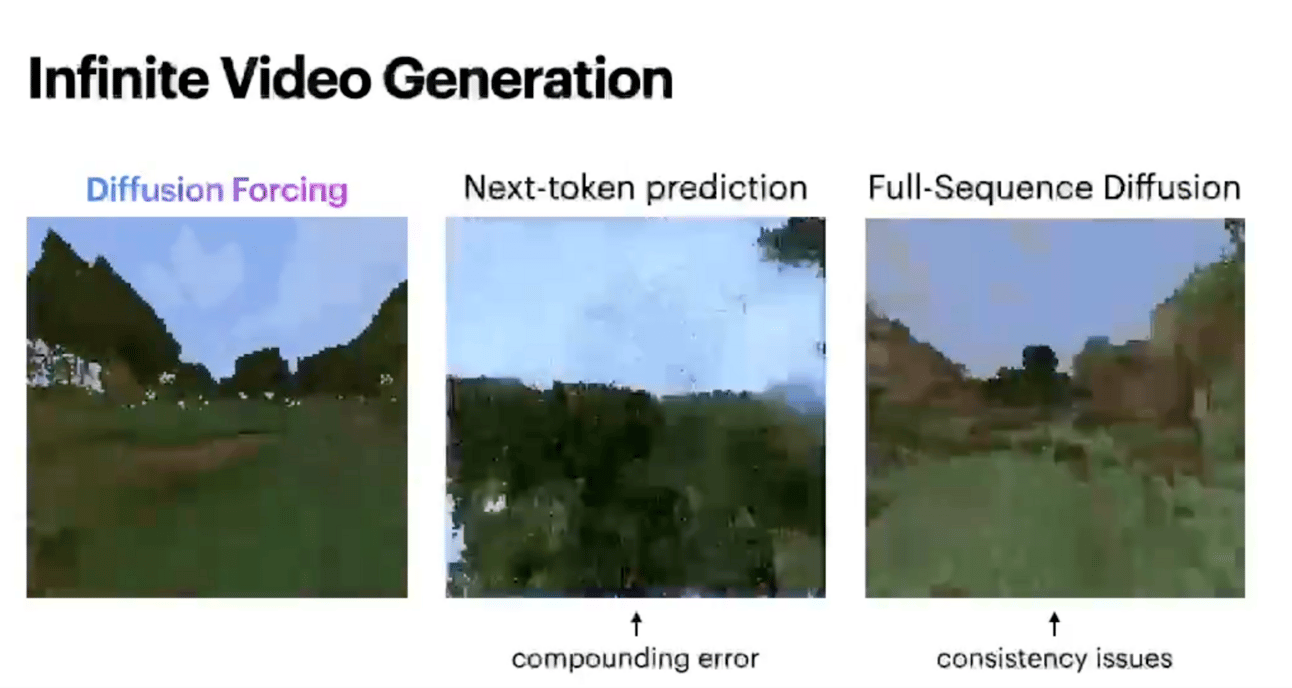
Screenshot: Boyuan ChenX
MIT researchers have introduced Diffusion Forcing, a novel approach unifying next-token prediction and full-sequence diffusion models like SORA. Released on June 3, Diffusion Forcing enhances performance and offers new sampling strategies in vision and robotics, including stable, infinite video generation and improved diffusion planning. Unlike traditional methods, Diffusion Forcing adds independent noise levels to different tokens during training, allowing flexible sampling of next tokens or full sequences. This method combines the flexibility of autoregressive models with the consistency of full-sequence diffusion, enabling long-horizon guidance and robust decision-making. Its applications in video prediction and robotics promise significant advancements in long-horizon tasks and world modeling, potentially transforming these fields.
Radboud's AI Converts Brain Waves to Pictures

Image: FreePik
Researchers at Radboud University in the Netherlands have developed an AI system that can recreate images based on brain activity. Using fMRI scans to detect brain activity, the AI learns which brain regions to focus on, enhancing the accuracy of its reconstructions. The team used both human fMRI scans and electrode recordings from a macaque monkey viewing images. This advancement could revolutionize our understanding of how the brain processes visual information, leading to breakthroughs in neuroprosthetics, brain-computer interfaces, and treatment of neurological conditions. It also offers potential new communication methods for individuals unable to speak or move, allowing them to interact using brain activity alone.
Chinese GPU Start-Up Expands Computing Clusters
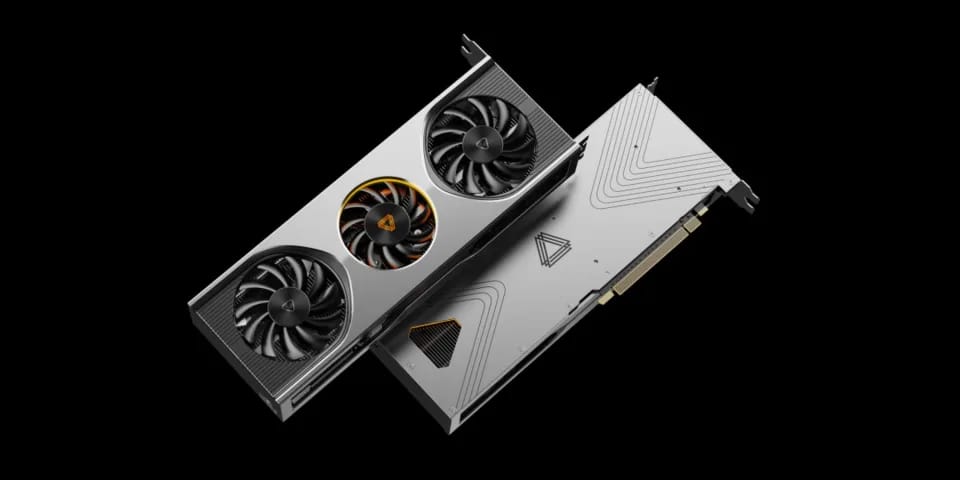
Image: MTT S80 graphics card from Moore Threads
Chinese GPU start-up Moore Threads has announced an upgrade to its AI data center solution, KUAE, enhancing the number of GPUs connectable in a single computing cluster to 10,000. Founded in 2020 by a former Nvidia China veteran, Moore Threads aims to provide robust infrastructure for China’s AI innovation amid US sanctions. The KUAE server integrates eight Moore Threads MTT S400 GPUs, featuring 128 tensor cores and 48GB of GPU memory, with a bandwidth of 768 GB/s. These GPUs are interconnected using the proprietary MTLink technology. Additionally, Moore Threads secured 2.5 billion yuan (US$343.7 million) in new financing and signed deals with China Mobile, China Unicom, China Energy Engineering Corporation, and Gulin Huajue Big Data Technology to build three computing cluster projects.
Nvidia's H20 Chips Boost China Sales Despite Restrictions

Screenshot: Nvidia/YouTube
Nvidia is projected to sell $12 billion worth of AI chips in China this year despite US export restrictions, according to a report by the Financial Times. Over the next few months, Nvidia plans to deliver more than 1 million of its new H20 chips, designed to bypass US restrictions. Each H20 chip, costing between $12,000 and $13,000, is expected to help Nvidia surpass its previous China revenue of $10.3 billion. The H20 chips have received positive feedback from Chinese customers despite their reduced performance compared to US counterparts. This development comes as US-China tech tensions continue to impact the semiconductor industry.
TIET, NVIDIA Launch Advanced AI School in India
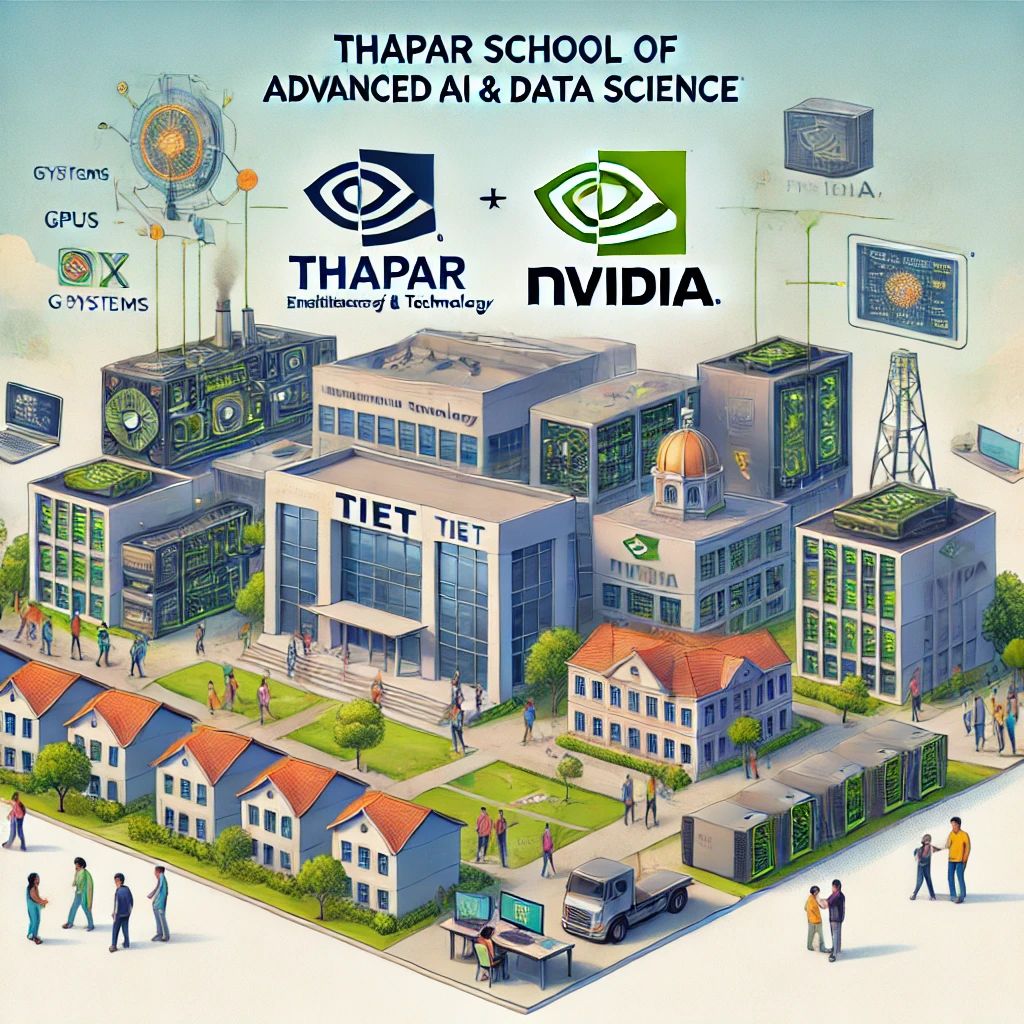
AI Generated Illustration
Thapar Institute of Engineering & Technology (TIET) announced a partnership with NVIDIA to establish the Thapar School of Advanced AI & Data Science (TSAAI) at its Patiala campus. This collaboration aims to provide academic programs, research opportunities, and innovation projects in AI. TSAAI will feature NVIDIA DGX systems with H100 and A100 Tensor Core GPUs, and the NVIDIA AI Enterprise software, offering 227 petaflops of AI performance and nearly 8 terabytes of GPU memory. TIET will also set up 500 Jetson Nano developer kits for edge computing. The institute plans to offer a BE in Artificial Intelligence and Machine Learning and later a Master's Program in AI, ML, and DS. NVIDIA will extend its 'Inception' program benefits to TIET-incubated AI startups.
AI Enhances Australia's Defense Data Analysis

AI Generated illustration
Australia will shift its top secret intelligence data to the cloud under a $2 billion deal with Amazon Web Services, enhancing interoperability with the U.S. Defense Forces. Defence Minister Richard Marles stated this move would improve data resilience, crucial for operations involving the F-35A joint strike fighter. The Australian Signals Directorate will also leverage artificial intelligence to analyze data, as Director General Rachel Noble emphasized AI’s transformative potential in intelligence. Noble assured that AI use would be ethical and well-governed. The cloud services, using distributed facilities, will ensure continuity even if one server fails, aligning Australia’s defense computing environment with that of the United States.
GPT Chatbots Empower Kenyan Anti-Government Protests

Screenshot: OpenAI
Kenya’s government has raised concerns about AI usage amidst youth-led, anti-government protests. Protesters have creatively employed AI and digital tools, such as Corrupt Politicians GPT, which reveals corruption cases involving Kenyan politicians, and Finance Bill GPT, which breaks down the now-scrapped Finance Bill 2024 and shares lawmakers’ phone numbers for constituent feedback. Protesters also used databases of politician-owned businesses, leading to boycotts and attacks, and created chatbots detailing parliamentary contributions. Platforms like TikTok, X, and lesser-known apps like Zello have been instrumental for coordination and mobilization. Crowdfunding on social media raised 29.8 million Kenyan shillings for medical and funeral costs, reflecting the intense and organized nature of the protests.
Heads Up
AI Health: US Med-Equip Eases Hospital Pain Point with AI
AI Market: Deepfake AI Market Worth $5 Billion by 2030
AI Solutions: Baltic Firm Develops AI Solutions For Small European Languages
AI Investment: California-based AI Firm Expands to India
AI Human Rights: AI needs more women
Save the Date
July 6-7: Geneva Hosts AI for Good Global Summit
Good reads
July 3: Patent Landscape Report: Generative Artificial Intelligence
July 4: Artificial intelligence: a central bank’s view