- Superintelligence
- Posts
- AI Revolution in Biotech
AI Revolution in Biotech
From Australia's AI Governance Framework to Asia's AI Localization Push
The AI World Today
AI Revolution in Biotech
Voice GPT-4o Postponed
Gemini AI Enhances Gmail
Lenovo's New AI Strategy
Asia's AI Localization Push
NVIDIA, GreenNode AI Collaboration
EC AI Finance Initiatives
High UAE AI Sentiment
Australia's AI Governance Framework
+
Take Note
Good Reads
AI Creates Protein, Raises Security Concerns

Screenshot: Evolutionaryscale.ai
A new startup, EvolutionaryScale, has created esmGFP, a glowing protein designed entirely by AI. This fluorescent protein, inspired by jellyfish and coral, showcases the power of their large language model for biotech, ESM3. EvolutionaryScale, which emerged from Meta’s biosciences efforts, used ESM3 trained on 2.78 billion proteins, boasting 98 billion parameters. ESM3 aims to streamline drug discovery by predicting proteins that can target diseases, significantly enhancing the efficiency of drug development.
Concurrently, a Department of Homeland Security (DHS) report highlights AI’s dual potential in biosecurity. The AI and Chemical, Biological, Radiological, and Nuclear (CBRN) Report warns of AI’s capability to both advance and jeopardize U.S. biosecurity. While AI aids scientific research and agriculture, it also poses risks of misuse in designing harmful molecules. The report emphasizes collaboration among industry, government, and academia to mitigate these risks.
OpenAI Postpones Voice-Activated GPT-4o Release

Screenshot: Standford Ecorner/YouTube
OpenAI announced it needs more time to make its most powerful voice-activated GPT-4o chatbot safer before public release. Despite debuting Advanced Voice Mode last month, controversy arose over its eerily Scarlett Johannson-like voice, Sky, which won't be used. The delay stems from ensuring the chatbot can detect and refuse inappropriate or harmful requests and scale up for millions of users. OpenAI aims for a fall release but stresses it depends on meeting its "safety and reliability bar." Recent departures of top employees working on responsible AI development have damaged its reputation, prompting cautious action.
Google Rolls Out Gemini AI for Gmail

Screenshot: google.com
Google is rolling out a Gemini AI side panel for Gmail, following its integration into Google Docs, Sheets, Slides, and Drive. The Gemini 1.5 Pro AI model will assist users by summarizing emails, suggesting responses, drafting emails, and finding specific information within emails or Google Drive files. Users can also ask freeform questions, such as "What was the PO number for my agency?" or "When is the next team meeting?" These features are available to Google Workspace customers with specific Gemini add-ons and Google One AI Premium subscribers. Rapid Release domain web users will see the feature within 1-3 days from June 24, while Scheduled Release domains will see it around July 8. Additional mobile features are expected soon.
Lenovo Integrates AI Across Multiple Devices

Screenshot: Lenovo
Lenovo Group Ltd is enhancing its AI strategy by integrating its Tianxi AI large language model across various devices, including AI PCs, smartphones, tablets, and IoT equipment. Liu Jun, president of Lenovo China, stated that this initiative aims to provide users with a "personal AI assistant" for work, study, and life scenarios. The AI system, Xiaotian, acts as the "AI Brain," enabling functions like intent understanding, perception, memory, and task planning. Zhang Hua, general manager of Lenovo's China consumer business group, highlighted improvements in document creation, editing, and seamless file transfer across devices. This strategy aims to replace traditional websites and apps as primary user entry points.
Omdia Report Highlights Asia's AI Localization

AI-Generated Image
A recent report from UK research firm Omdia highlights the divergent AI strategies of American and Asian companies. While US firms focus on Artificial General Intelligence (AGI), Asian countries prioritize localization and cultural preservation, with cloud service providers and telecom companies leading the charge. The report, "Asia and Oceania: Local and Regional Responses to Generative AI," forecasts a $18.3 billion revenue for Generative AI software in the region by 2028, with a 53% CAGR. Companies like Alibaba, Baidu, Huawei, and Tencent are advancing AI localization using their own infrastructure and models. Governments are expected to implement policies to enhance infrastructure and talent recruitment, maintaining global AI competitiveness.
GreenNode and NVIDIA Launch AI Data Cluster
Insights Asia
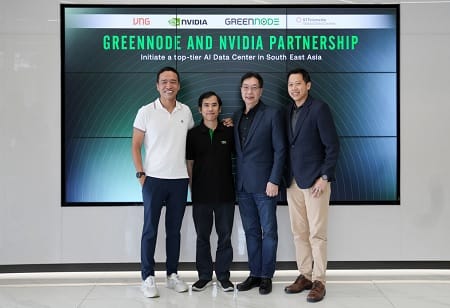
GreenNode, a division of VNG and a preferred NVIDIA Cloud Partner, has launched a major AI Data cluster in Bangkok, Thailand. This facility is one of Southeast Asia's first AI-capable hyperscale data centers, managed by GreenNode's Cloud Operation Excellence. The center meets global standards, including LEED Gold certification and Uptime Tier III. Equipped with a 20MW capacity and InfiniBand network offering up to 3.2Tbps bandwidth, it aims to support AI enterprises across Asia. The cluster features thousands of H100 Tensor Core GPUs and provides robust infrastructure for training advanced AI models. GreenNode's rapid six-month commercialization underscores its commitment to becoming a leading AI Cloud service provider in Southeast Asia.
EC Launches AI Workshops for Financial Sector
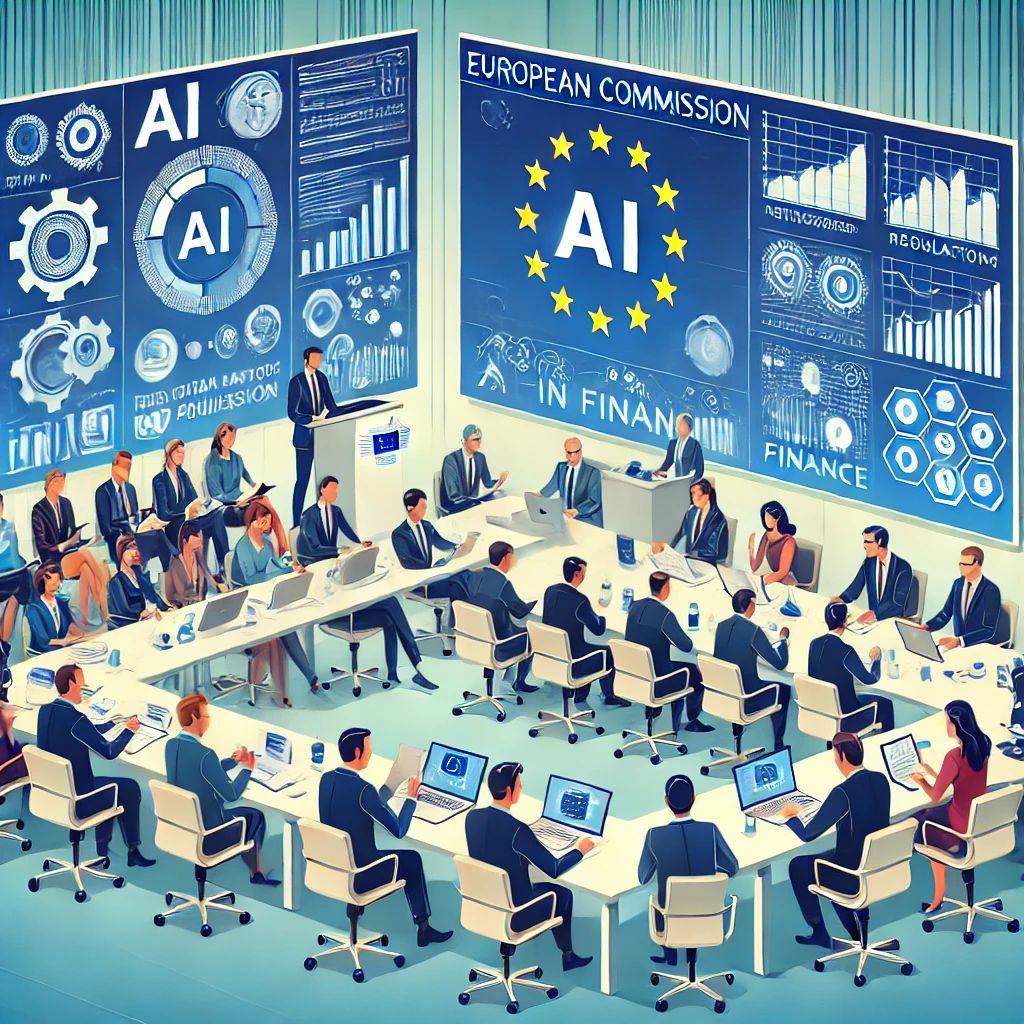
Illustration image
The European Commission has launched two initiatives to gather insights from financial market stakeholders on AI applications in the financial sector. These initiatives aim to assess market developments, understand AI-related risks, and prepare for the AI Act implementation in finance. The Autorité des marchés financiers (AMF) will host virtual workshops from September to December 2024, inviting financial services firms to share their AI project experiences. Responses are due by July 26. Additionally, a public consultation open until September 13 invites all financial ecosystem players to share their views on AI usage.
Australia Releases National AI Governance Framework
Screenshot: finance.gov.au
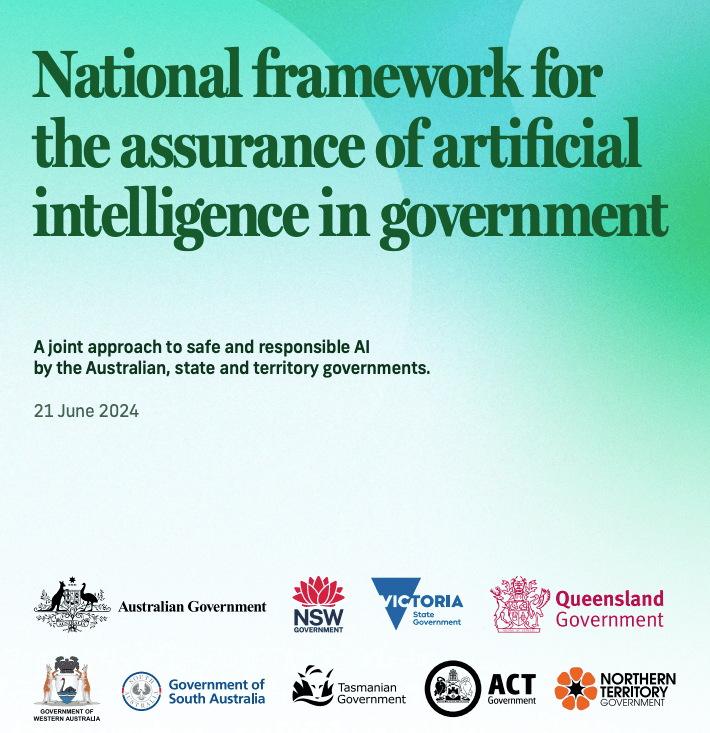
The Australian government has released its "National framework for the assurance of AI in government," a critical document for AI, public administration, and policymaking. The framework stresses updating decision-making and accountability structures to accommodate AI's impact, ensuring diverse perspectives, clear lines of responsibility, and maintaining ethical standards while fostering innovation. Key recommendations include prioritizing traceability during system development, establishing monitoring and feedback loops to address risks, and ensuring oversight mechanisms for high-risk settings. It also emphasizes internal skills development and knowledge transfer to avoid vendor lock-in and manage new risks associated with AI. The framework integrates Australia’s eight AI Ethics Principles including, human, societal, and environmental wellbeing; human-centered values; fairness; privacy protection and security; reliability and safety; transparency and explainability; contestability, and accountability. These principles guide the ethical and effective use of AI within government operations.
Take note
AI in Govt: US Senate Proposal Sets AI Procurement Standards
AI for Work: AI Use at Work Increases Loneliness
AI Investment: France Leads Europe's Generative AI Funding
AI in the EU: AI Startups Win EU GPU Hours
AI in Southeast Asia: Asian Gastro Docs Trust AI
AI in Middle East: Israel to Build AI Supercomputer
AI in Gulf: Bayut, Dubai Land Launch AI Tool